Crypto: a beginner's roadmap to investing without blowing up your account
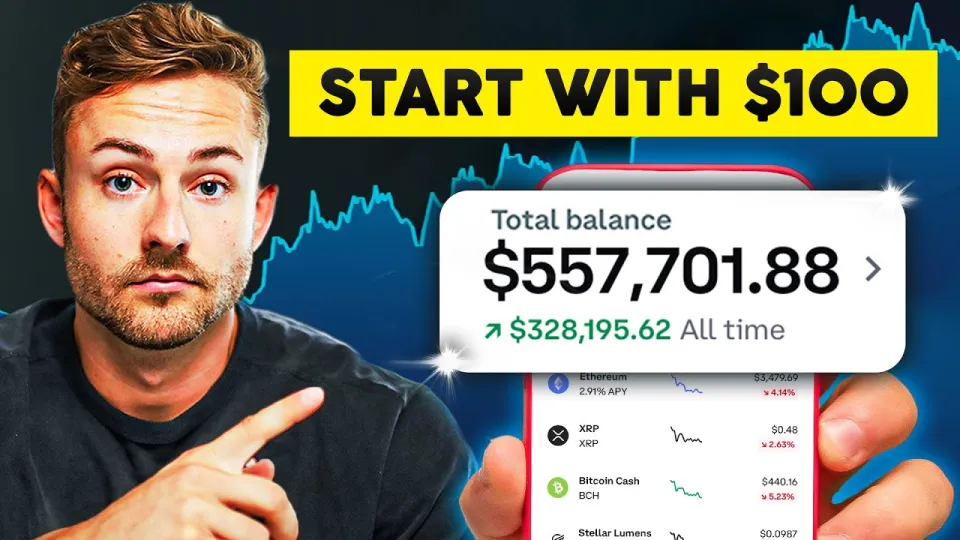
Video: How To Invest in Crypto as A COMPLETE Beginner [2025 GUIDE]
You can order the same kind of articles for your own video to boost it on YouTube and Google. Just message the Telegram bot @sat_sit_bot. The bot writes and publishes the articles itself (with your YouTube video embedded) on popular topical websites (no ads). Free trial — 50 articles.
· based on the channel Craig Percoco
Key takeaways
- Craig Percoco built his beginner framework on roughly seven years of trading and investing experience.
- The core split is fundamentals (what a token does, tokenomics, supply) versus technicals (price charts and market structure).
- Most beginner losses come from no system, no patience, no backtesting, no journal and poor risk management rather than bad coin picks.
- Crypto trades 24/7, so position sizing and stop placement matter more than picking the perfect entry.
- A free trading education link from the video is available at bit.ly/3VHSOeT.
Crypto investing for a complete beginner starts with three decisions, not with picking a coin: decide how much money you can afford to lose, decide whether you are buying and holding or actively trading, and decide how you will record every position. Everything else — which exchange, which token, which entry — follows from those three. Craig Percoco, who has traded and invested for about seven years, lays out that framework in his beginner guide, and a free trading education starter kit is available at the free trading course.
What crypto actually is and why beginners keep losing money
Crypto is a market of digital assets that settle on blockchains, trade around the clock on exchanges, and have no closing bell, no circuit breakers and no central bank behind them. Bitcoin is the largest and oldest, Ethereum is the biggest smart-contract platform, and thousands of altcoins sit below them with far thinner liquidity. That structure explains the two things beginners notice first: prices move fast, and prices move while you sleep.
The losses new investors report follow a predictable pattern. They enter on a green candle, size the position too large, refuse to take a small loss, and then either panic-sell at the bottom or hold a dead token for months. The recurring list of failures is boring and consistent: no system, no patience, no discipline, no backtesting, no journal, poor psychology and poor risk management. Notice that none of those are about picking the wrong coin. Most beginners do not lose because they bought the wrong asset; they lose because they had no process for the asset they bought.
Crypto fundamentals: what to check before you buy anything
Fundamentals answer the question "what does this token actually do, and who is on the other side of my trade?" Before buying any asset, work through a short checklist:
- Purpose. What problem does the network solve, and does it need a token to solve it? A token with no clear use beyond speculation has no floor.
- Tokenomics. Total supply, circulating supply, inflation schedule and unlock dates. A token that releases large amounts to early investors every month has a permanent seller overhead.
- Team and track record. Who is building it, how long have they been shipping, and what did they deliver before?
- Liquidity. Check daily volume and order-book depth. A thin market means your exit is expensive even if the chart looks perfect.
- Narrative and cycle position. Crypto moves in cycles, and different sectors lead at different points. Buying a token after a 10x because it is trending is not fundamental analysis.
For a beginner, the sane default is to build the core of a portfolio in the two assets with the deepest liquidity and longest track records — Bitcoin and Ethereum — and treat everything else as a small, capped satellite allocation. That is not a lack of ambition; it is how you survive long enough to learn.
Technicals for beginners: reading a chart without pretending to predict it
Technical analysis in crypto is mostly about market structure and risk, not prophecy. The useful beginner skills are limited: identify the trend on a higher timeframe, mark the obvious support and resistance levels where price has repeatedly reversed, and know where your stop goes before you enter. If you cannot point to the level that would prove you wrong, you do not have a trade — you have a hope.
A few practical rules that do most of the work:
- Higher timeframe first. A daily chart tells you the environment; a 5-minute chart tells you noise.
- Volume confirms. A breakout on weak volume is usually a trap, which is exactly the false-breakout problem that grinds down new traders who chase every setup.
- Backtest before you risk money. Go back through past charts and record what would have happened. It costs nothing and reveals whether your idea has an edge.
- One setup at a time. Master a single pattern or structure before adding a second.
How to make money in crypto without blowing up your account
Making money in crypto comes from position sizing and exits, not from being right more often. A trader who is right 40% of the time with disciplined risk can be profitable; a trader who is right 70% of the time with oversized positions tends to end at zero. The mechanics:
- Risk a fixed small percentage per trade — commonly 1–2% of the account — so a losing streak is survivable.
- Set the stop from the chart, then size the position to match that stop, not the other way around.
- Take partial profits into strength rather than waiting for a perfect top.
- Separate investing from trading. Long-term holdings should not be sold to fund a short-term trade.
- Journal every trade with entry, exit, size and reason. The journal is where the improvement happens.
Leverage is where beginners die fastest. Futures and margin trading can wipe out more than the initial deposit, and crypto exchanges make leverage one tap away. Treat it as an advanced tool, not a shortcut.
How to buy and sell crypto safely
Buying crypto is the easy part; keeping it is the hard part. The standard beginner path:
- Choose a regulated, well-known exchange with reasonable fees and a fiat on-ramp in your country.
- Complete identity verification — required by licensed platforms.
- Fund the account with a bank transfer or card, accepting that card purchases usually cost more in fees.
- Place a limit order instead of a market order when you are not in a hurry; you control the price you pay.
- Move long-term holdings to self-custody — a hardware wallet with a seed phrase written on paper, stored offline, never photographed and never typed into a website.
- Sell in tranches, not all at once, and keep records of every transaction for tax purposes.
Two habits prevent most disasters: never share your seed phrase with anyone, and never send funds to an address you have not verified character by character. Phishing sites and fake support accounts target beginners precisely because they are in a hurry.
Typical beginner questions and doubts, answered honestly
Many people approach crypto with open skepticism and a willingness to learn, which is the right starting posture. Skepticism keeps you from over-allocating; curiosity keeps you from dismissing the asset class entirely. The healthy middle is a small, deliberate allocation you fully understand.
The most common doubts are about time and profitability. Day trading is not a faster route to freedom — it is a full-time skill that takes years to develop, and the majority of retail traders underperform simply buying and holding. A mentor or structured course can shorten the learning curve, but no course removes the need for screen time, backtesting and journaling. Beware of anyone promising monthly returns, guaranteed profit or a private signal group that will make you rich; those claims are the oldest scam format in this market. Also be careful with the success stories in comment sections — a screenshot of a six-figure profit is not evidence of a repeatable method, and some of those posts are promotional.
All the links from the video
- Free trading education starter kit: https://bit.ly/3VHSOeT
- Crypto trading course and private team: https://bit.ly/3xhn47c
- Discord community access: https://bit.ly/3VmrO3r
- All resources: https://bit.ly/3zeM13u
- TradingView charting: https://bit.ly/3Xf9uvz
Final takeaway
Crypto rewards preparation and punishes improvisation. Build a core position in liquid assets, keep speculative bets small, define your risk before every entry, and write down what you did and why. That process, more than any single coin pick, is what separates investors who last through a cycle from those who disappear in the first drawdown. If you want a structured starting point, Craig Percoco's video breakdown walks through the same framework, and you can begin with the free trading education starter kit. None of this is financial advice — size positions so that being wrong is survivable.
Questions & answers
How much money do I need to start investing in crypto?
You can start with a very small amount because most exchanges allow purchases of $10–$50. What matters more is the proportion: only use money you could lose entirely without changing your life, and keep speculative altcoin positions to a small slice of that total.
Is crypto trading or buying and holding better for a beginner?
Buying and holding liquid assets is the simpler and usually more forgiving path, because it removes timing pressure and leverage. Active trading is a skill that requires backtesting, journaling and strict risk control, and most beginners underestimate how long it takes to become consistent.
Why do most new traders lose money in crypto?
The recurring causes are oversized positions, no stop-loss plan, chasing breakouts on weak volume, no journal and no backtesting. The market's 24/7 nature and easy access to leverage amplify every one of those mistakes.
How do I keep my crypto safe after buying it?
For long-term holdings, move coins to a hardware wallet and store the seed phrase offline on paper, never in photos or cloud notes. On exchanges, enable two-factor authentication, use a unique password and verify every withdrawal address before sending.
Source: How To Invest in Crypto as A COMPLETE Beginner [2025 GUIDE] · Markdown version